

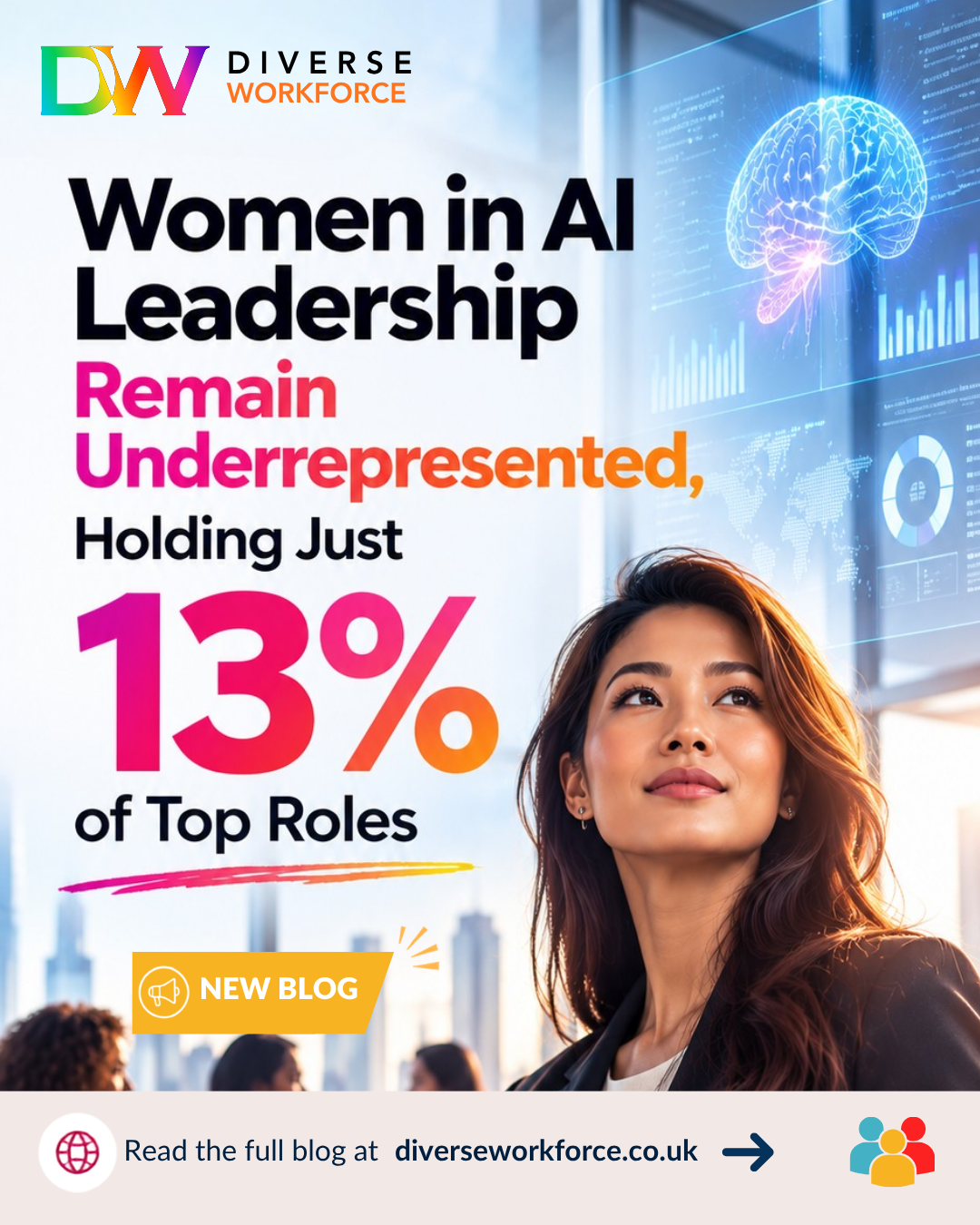
Women in AI Leadership Remain Underrepresented, Holding Just 13% of Top Roles
Artificial intelligence is transforming industries and creating some of the fastest-growing, highest-paying jobs in today’s economy. Yet despite the rapid expansion of AI opportunities, women remain significantly underrepresented in both the workforce and leadership positions shaping the future of the technology.
Recent research highlights a persistent gender gap across hiring, leadership, and AI adoption, raising concerns about who gets to build, govern, and benefit from artificial intelligence.
Women Hold a Minority of AI Positions Worldwide
Although women have made progress in technology-related careers, their representation in AI remains relatively low. Women account for about 22% to 30% of the global AI workforce, meaning men still dominate most artificial intelligence roles worldwide.
The imbalance becomes even more pronounced at senior levels. According to LinkedIn Economic Graph research covering 27 countries, women hold only 13% of C-suite AI leadership positions at AI companies. Similarly, UN Women reports that women occupy fewer than 14% of senior leadership roles in the AI sector globally.
These leadership positions play a critical role in determining how AI technologies are designed, deployed, regulated, and scaled. As a result, the lack of female representation influences not only workplace diversity but also the perspectives shaping AI systems.
AI Hiring Trends Show Continued Gender Disparities
The hiring gap remains another major challenge.
LinkedIn data shows that women account for just 26% of new hires into AI-specific roles, compared to roughly 50% of hires in non-AI occupations. Although AI jobs often offer significantly higher salaries and stronger career growth opportunities, women still enter these positions at much lower rates than men.
Research suggests the problem is not limited to leadership alone. Women’s representation declines throughout the AI career pipeline, from entry-level positions to executive leadership, creating what LinkedIn researchers describe as a widening gap at every stage.
Women Are Also Less Likely to Use Generative AI Tools
The gender gap extends beyond employment statistics.
UN Women reports that women are approximately 20% less likely than men to use generative AI tools. Other studies have found women adopt AI applications at rates roughly 20% to 25% lower than their male counterparts.
This adoption gap can create a compounding effect. As AI skills become more valuable across industries, lower usage rates may limit women’s opportunities to gain experience, confidence, and visibility in AI-driven workplaces.
Why Women Remain Underrepresented in AI Leadership
Several interconnected factors contribute to the gender gap in AI.
1. The STEM Pipeline Challenge
One of the most frequently cited issues is the longstanding underrepresentation of women in science, technology, engineering, and mathematics (STEM) fields. Because many AI careers require technical backgrounds, fewer women entering STEM programs means a smaller talent pool for AI roles.
This challenge begins early and often continues throughout higher education and professional development, affecting the number of women available for advanced AI roles later in their careers.
2. Unequal Access to AI Learning Opportunities
Research has shown that women often receive less managerial encouragement and fewer opportunities to experiment with emerging AI technologies in the workplace.
When employees lack equal access to training, mentorship, or hands-on AI projects, skill gaps can widen over time. These disparities may reduce promotion opportunities and make it harder for women to move into specialised or leadership-focused AI positions.
3. Occupational Segregation and Automation Risks
Women remain heavily concentrated in administrative, clerical, and support roles—occupations that many experts believe face a higher risk of disruption from generative AI technologies.
According to UN Women and International Labour Organisation findings, women are disproportionately represented in jobs exposed to AI-driven automation, while remaining underrepresented in the technical and leadership roles responsible for creating and managing these technologies.
This creates a concerning imbalance: women may face greater exposure to AI-related workplace disruption while having less influence over the technology’s development.
Why Representation in AI Leadership Matters
Artificial intelligence increasingly influences decisions related to hiring, healthcare, finance, education, public services, and online experiences. Diverse leadership teams can bring a broader range of perspectives to discussions about fairness, bias mitigation, safety, and ethical governance.
Experts argue that greater representation of women in AI leadership is not only a workforce issue but also a technology governance issue. The people who design and oversee AI systems help determine how those systems impact society.
As AI continues to reshape economies worldwide, ensuring broader participation in AI careers and leadership roles may help organisations build technologies that better reflect the needs and experiences of diverse populations.
Looking Ahead
The AI sector offers enormous opportunities for innovation, career growth, and economic advancement. However, current data shows that women remain underrepresented across the AI talent pipeline, from hiring to executive leadership.
Closing these gaps will likely require continued investment in STEM education, workplace training, mentorship programs, leadership development, and equitable access to AI tools and opportunities. Employers also play a critical role by creating inclusive hiring practices, supporting career progression, and ensuring women have opportunities to develop AI-related skills.
Organisations such as Diverse Workforce are working to promote inclusive employment opportunities and connect employers with talent from underrepresented groups, including women, helping to create more equitable pathways into high-growth industries. By supporting diversity initiatives and expanding access to leadership opportunities, businesses can build stronger, more innovative teams.
As organisations race to adopt artificial intelligence, ensuring women have a meaningful role in shaping the technology may become an increasingly important factor in building an inclusive AI future.
For employers looking to build more diverse and inclusive teams, Diverse Workforce provides resources, job opportunities, and recruitment solutions that help connect organisations with talented professionals from underrepresented communities.”